Hans Zhu · Unofficial OpenClaw Study Notes
← Back to home

Unofficial personal study notes. Not affiliated with, endorsed by, or sponsored by the OpenClaw project or its maintainers.

Unofficial · Personal study notes

Unofficial OpenClaw Architecture Study Notes

My personal notes on how OpenClaw appears to orchestrate LLMs, tools, and memory for long-running agent workflows—written for my own learning, not as product documentation.

Slide 01

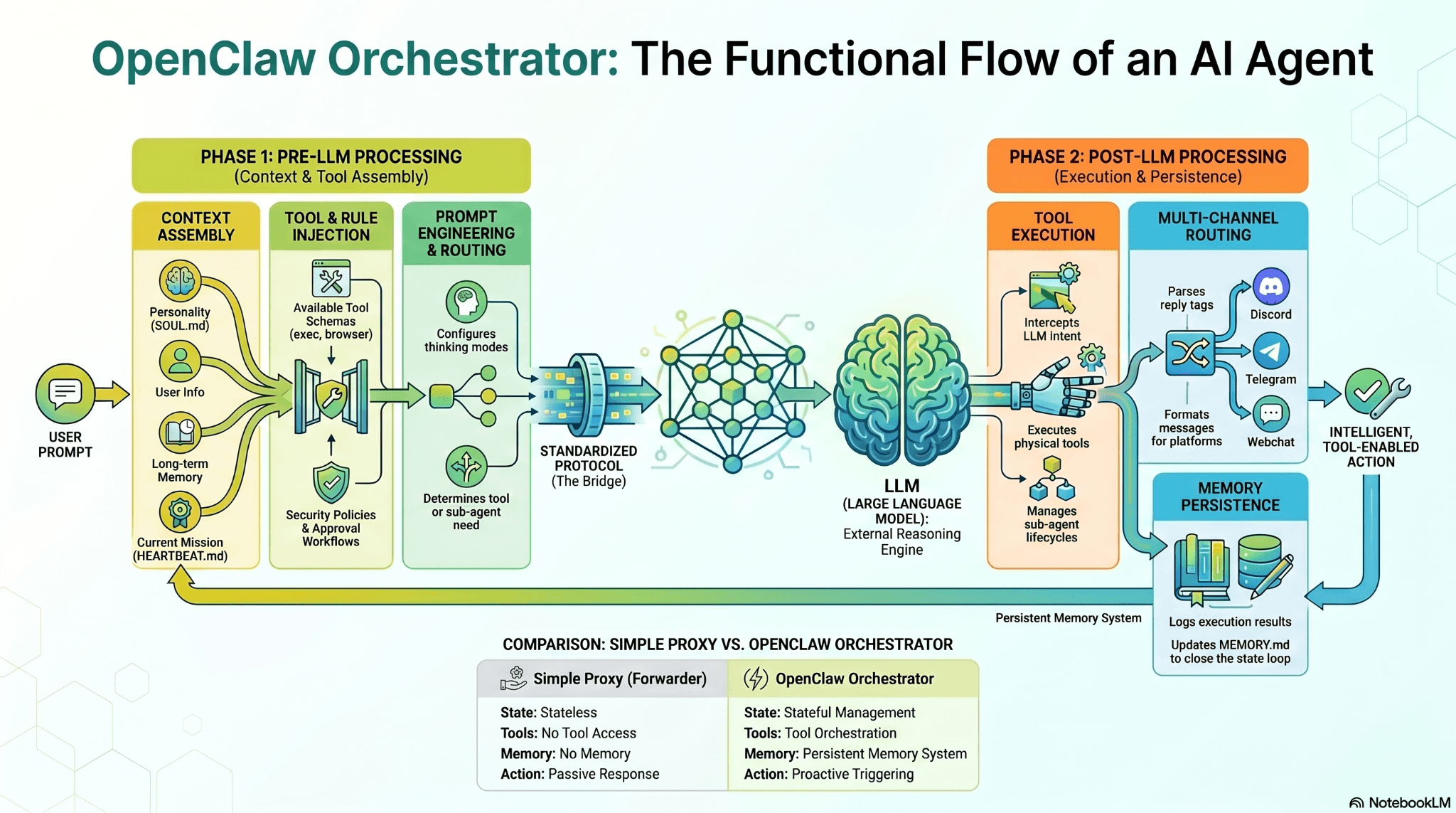
OpenClaw Orchestrator: AI Agent Functional Flow

Starting from the user's prompt, OpenClaw assembles context, injects tool rules, executes, routes, and persists memory before and after the LLM.

OpenClaw Orchestrator: AI Agent functional flow
Slide 02

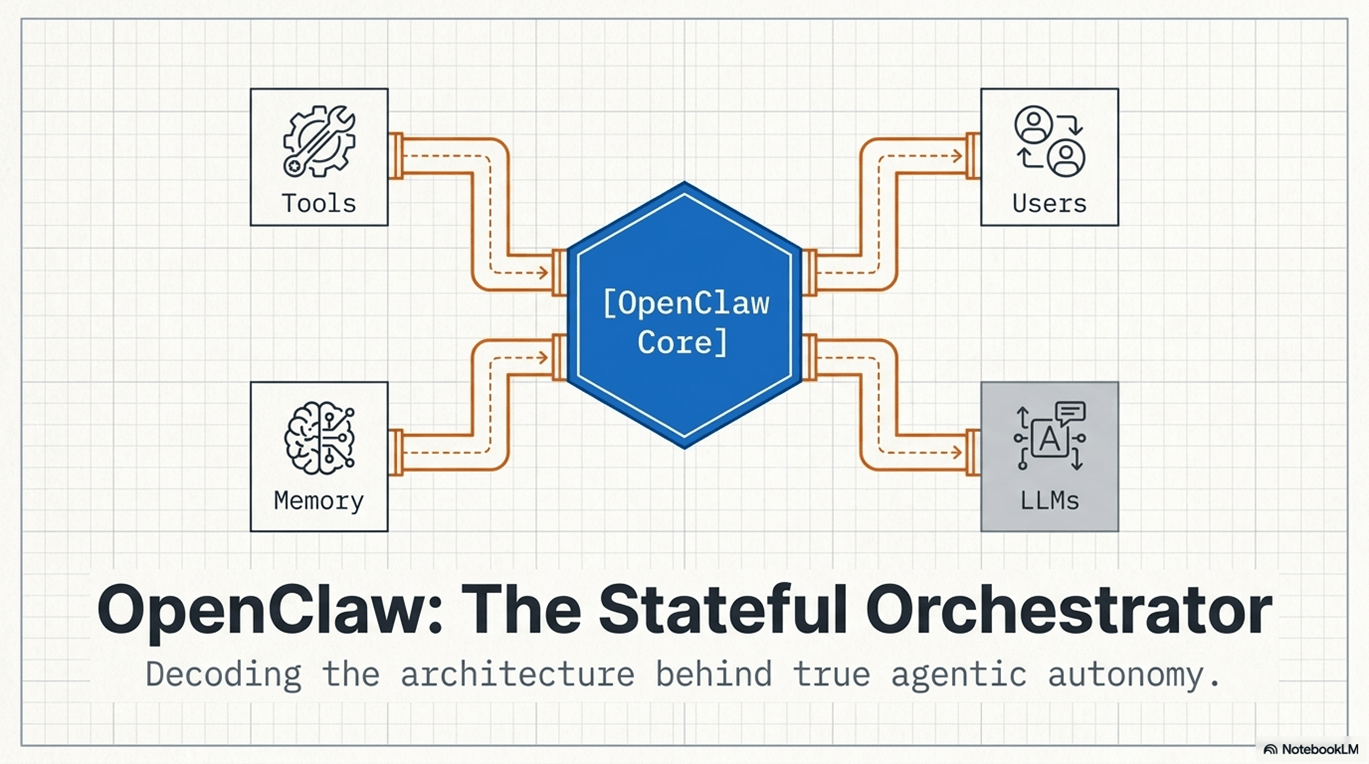
OpenClaw: The Stateful Orchestrator

OpenClaw Core sits between Tools, Memory, Users, and LLMs, orchestrating state, tools, and user interaction into a runnable agentic system.

OpenClaw: The Stateful Orchestrator
Slide 03

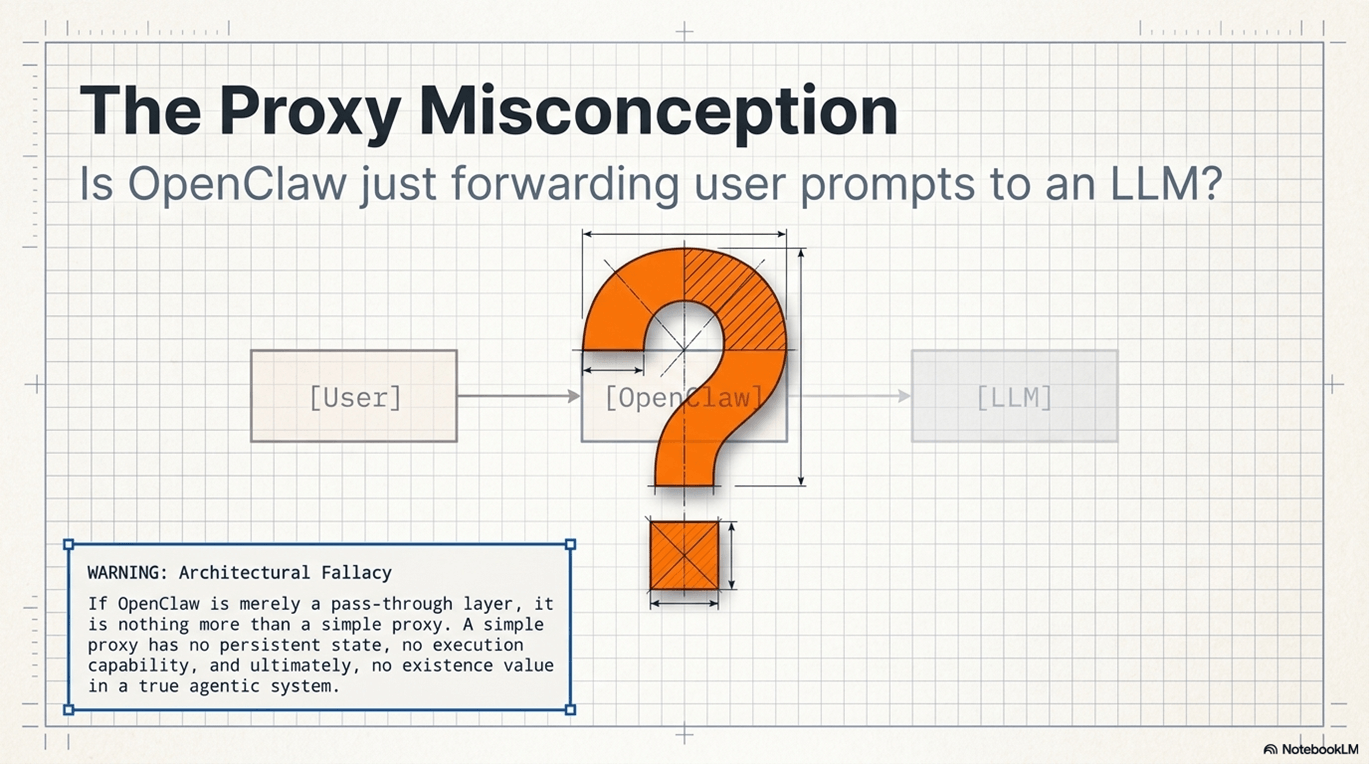
The Proxy Misconception

OpenClaw does not simply forward prompts to the LLM. A proxy alone lacks durable state, execution capability, and the reason a real agent system exists.

The Proxy Misconception
Slide 04

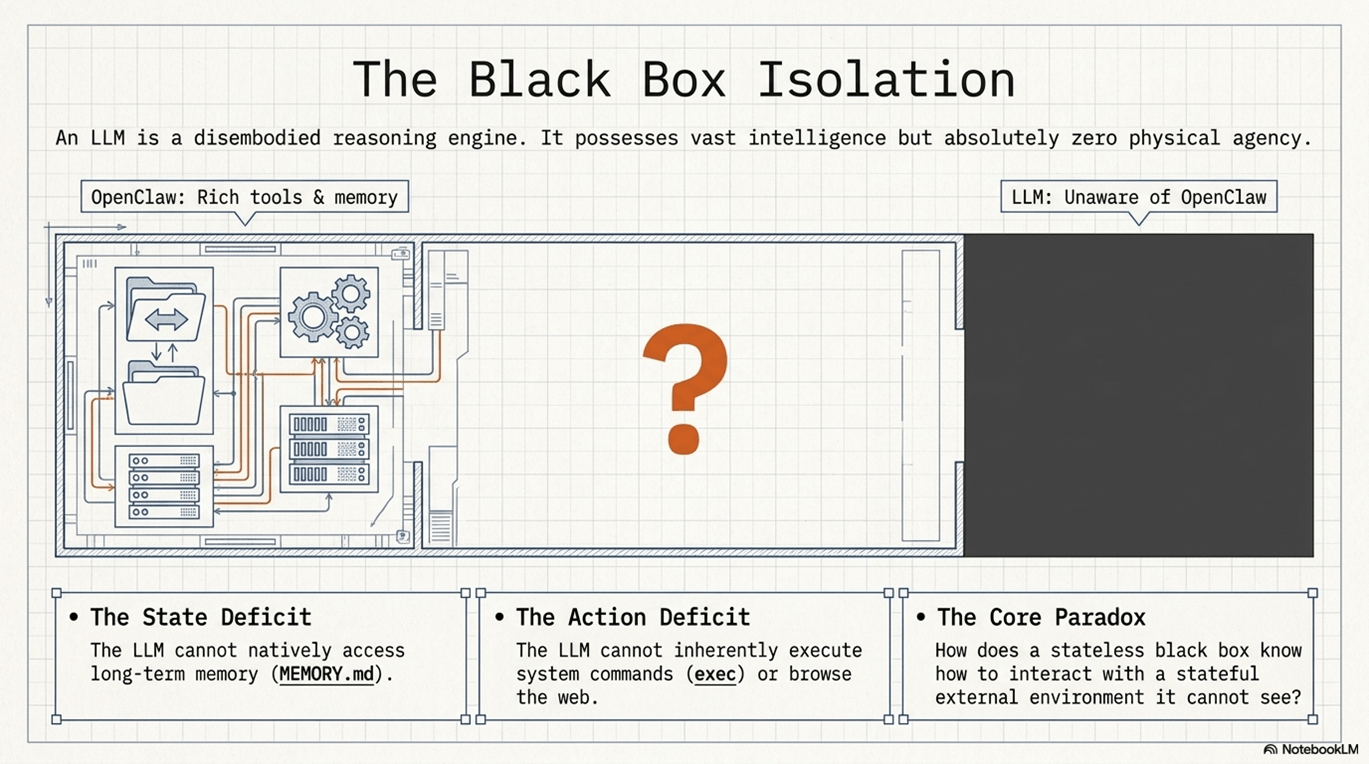
The Black Box Isolation

The LLM is a black-box reasoning engine without long-term memory or physical agency. OpenClaw adds state and an execution environment.

The Black Box Isolation
Slide 05

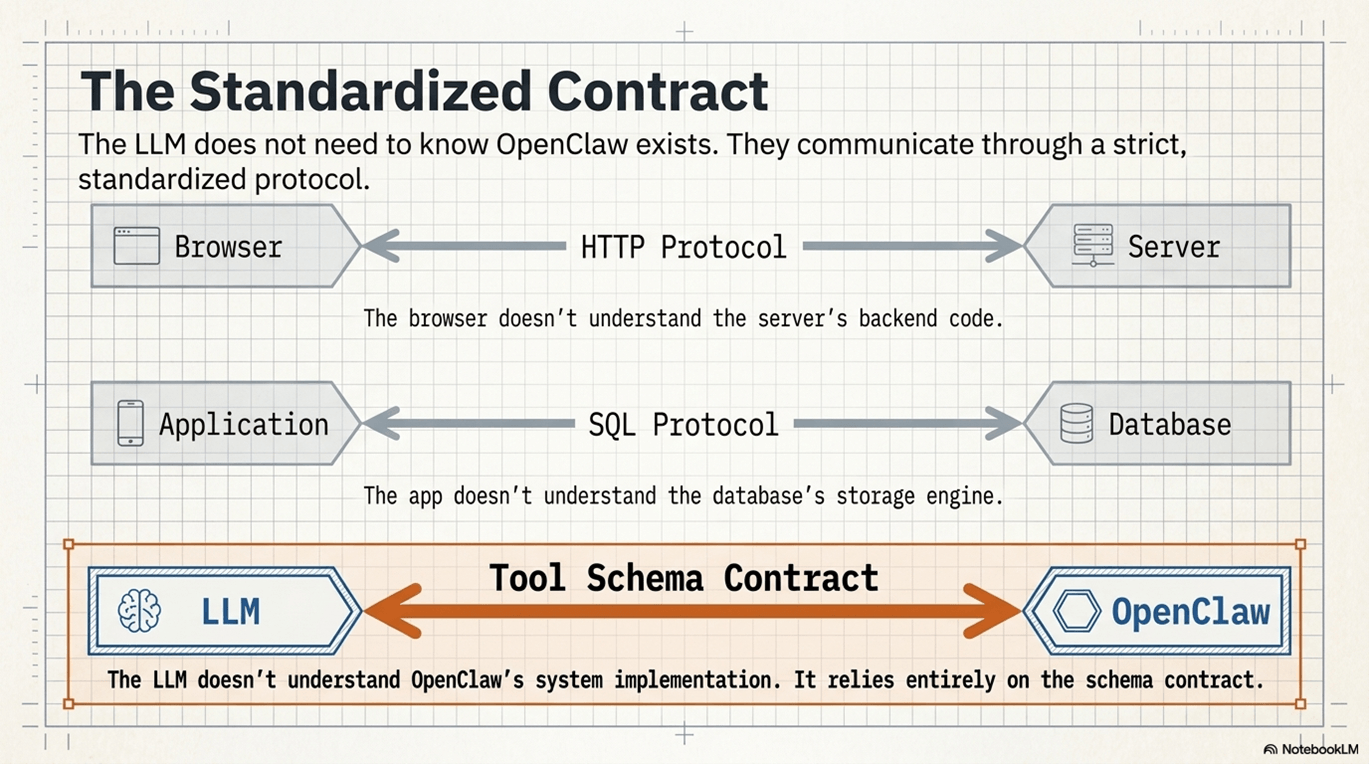
The Standardized Contract

The LLM does not need to understand OpenClaw's internals. Both sides communicate through a standardized tool schema contract.

The Standardized Contract
Slide 06

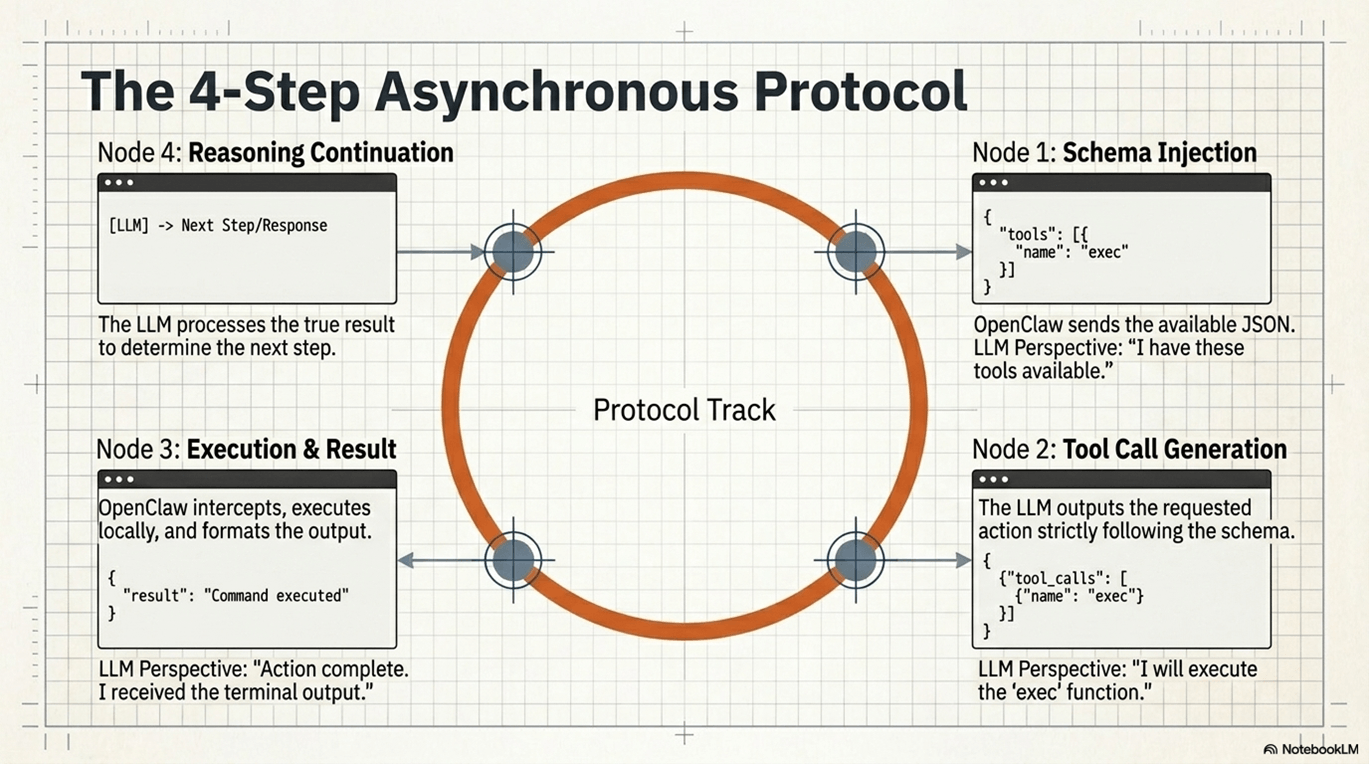
The 4-Step Asynchronous Protocol

The protocol covers Schema Injection, Tool Call Generation, Execution & Result, and Reasoning Continuation.

The 4-Step Asynchronous Protocol
Slide 07

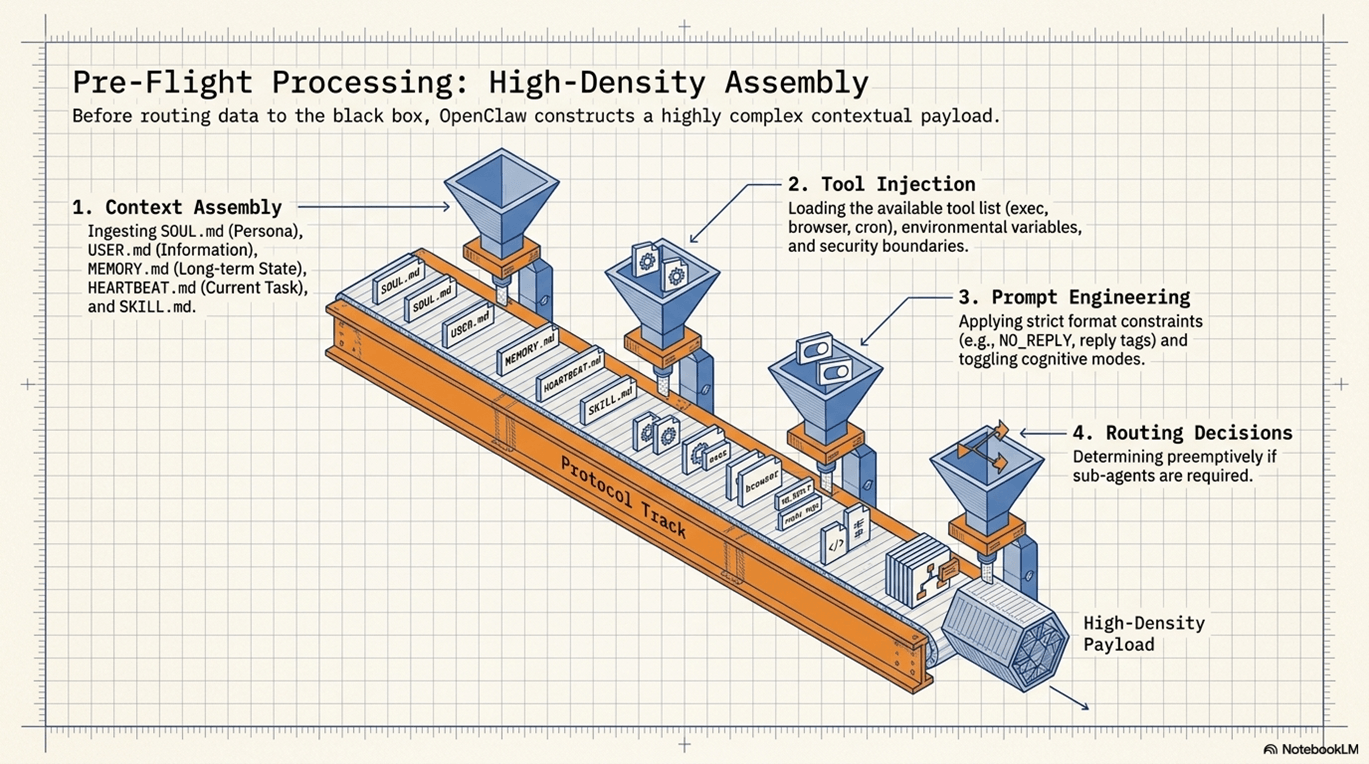
Pre-Flight Processing: High-Density Assembly

Before sending to the LLM, OpenClaw assembles persona, user info, memory, heartbeat, skills, tools, rules, and routing decisions.

Pre-Flight Processing: High-Density Assembly
Slide 08

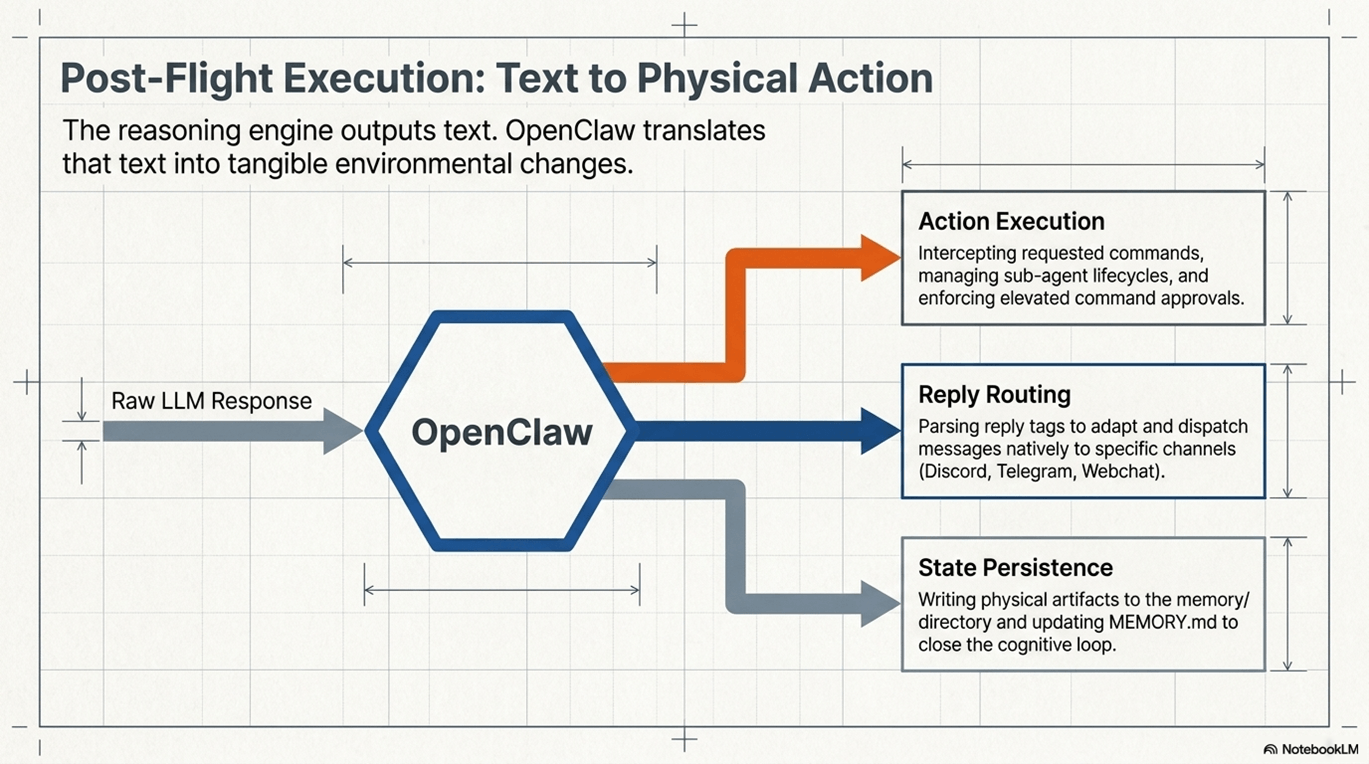
Post-Flight Execution: Text to Physical Action

After the LLM outputs text, OpenClaw turns it into command execution, cross-platform reply routing, and memory updates.

Post-Flight Execution: Text to Physical Action
Slide 09

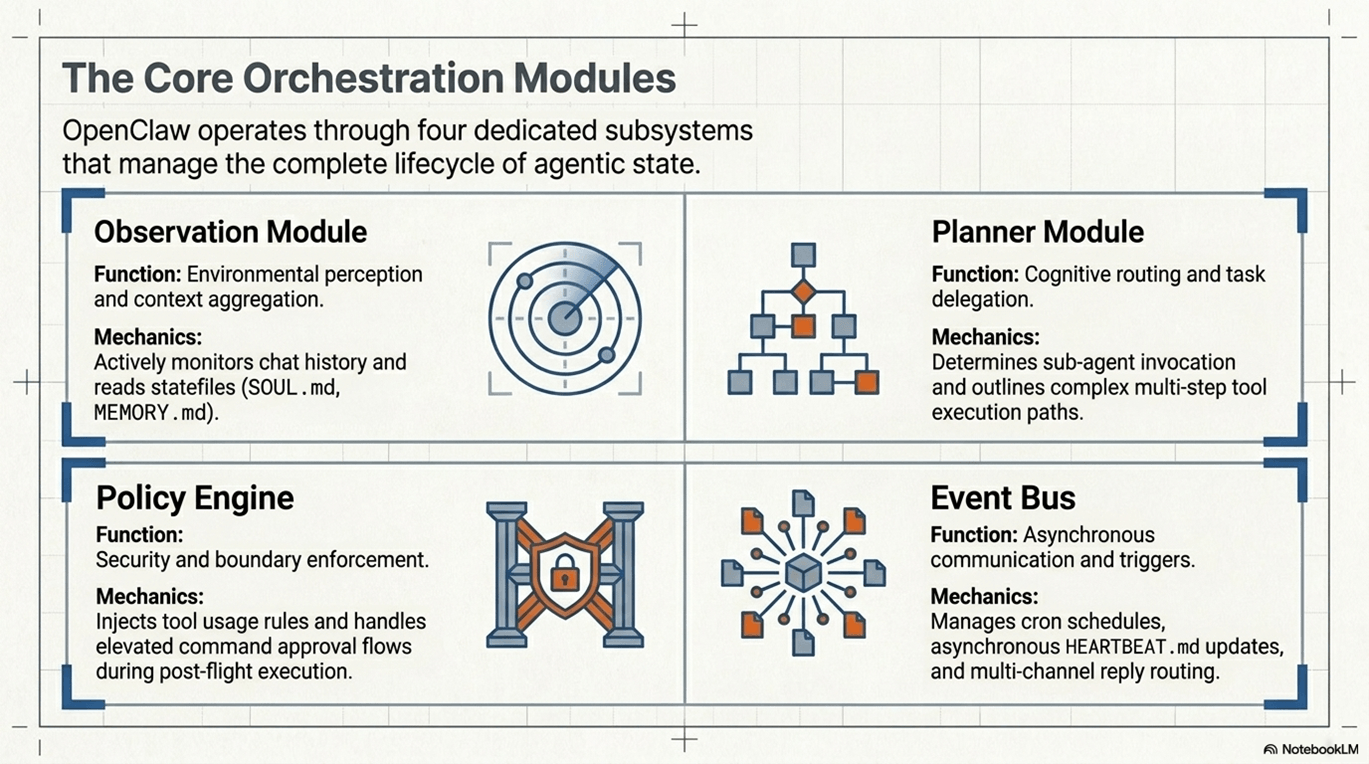
The Core Orchestration Modules

Core modules include Observation, Planner, Policy Engine, and Event Bus, managing the full lifecycle of agentic state.

The Core Orchestration Modules
Slide 10

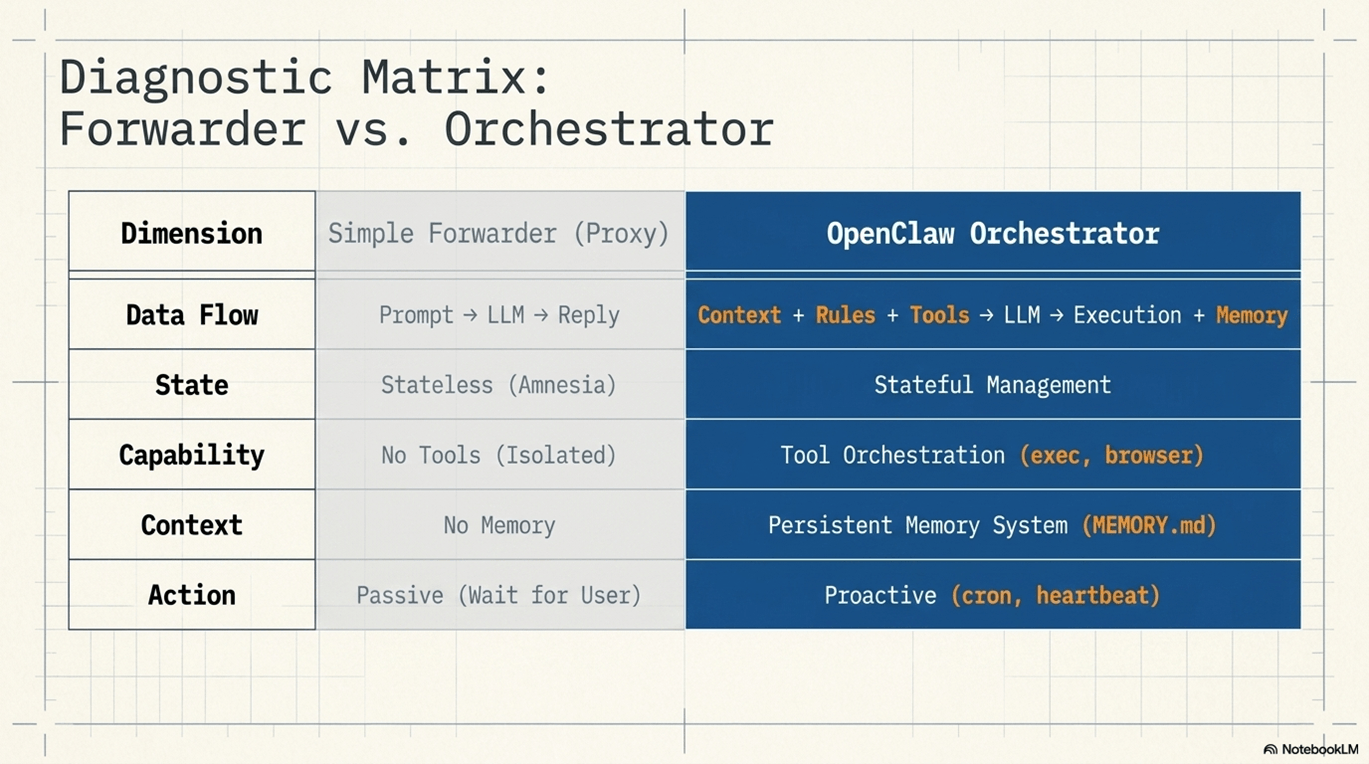
Diagnostic Matrix: Forwarder vs. Orchestrator

Compared to a simple forwarder, OpenClaw provides stateful management, tool orchestration, persistent memory, and proactive triggers.

Diagnostic Matrix: Forwarder vs. Orchestrator
Slide 11

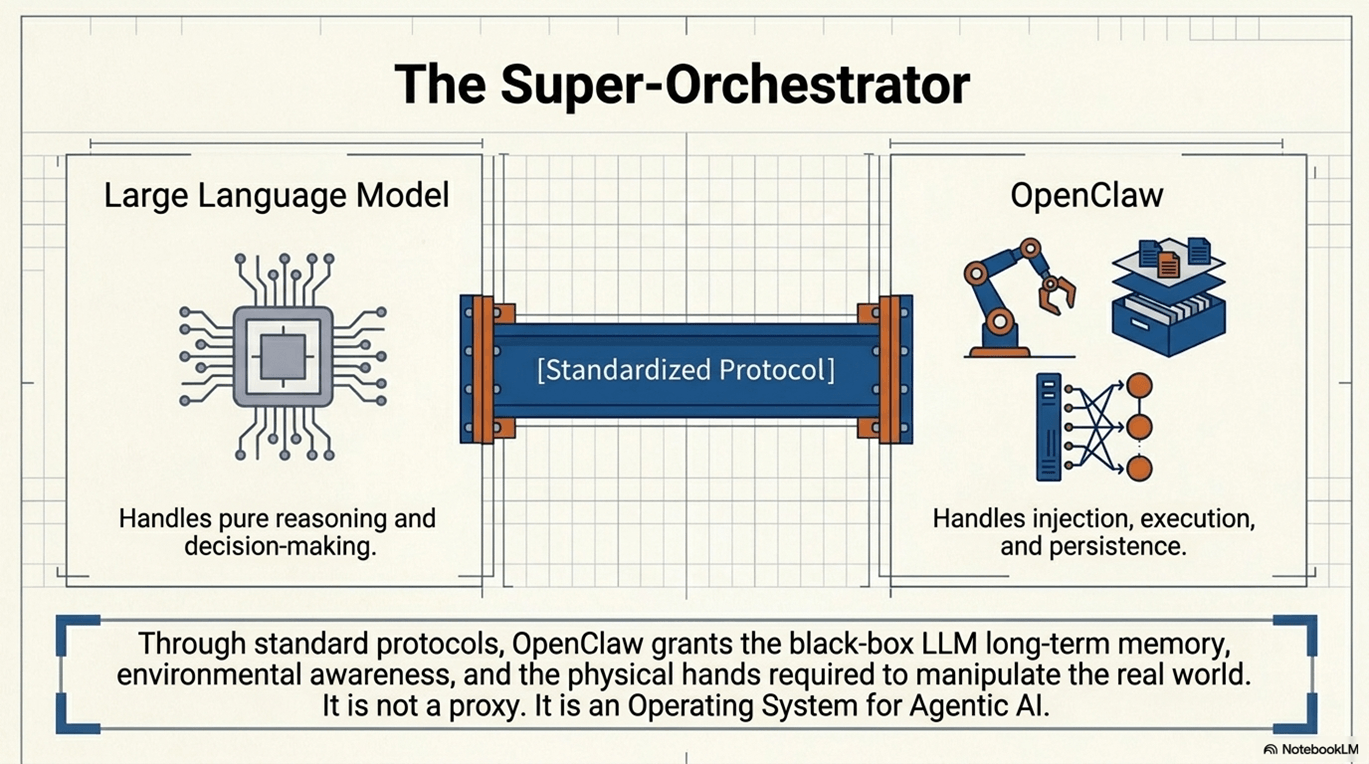
The Super-Orchestrator

Through a standard protocol, OpenClaw gives the LLM long-term memory, environmental awareness, and executable "hands," making it more like an operating system for agentic AI.

The Super-Orchestrator

Key Takeaways